

09.12.2025 | Buying
September Priority Report
When Toronto buyers and sellers want to know where the market is actually heading, they do not look to the headlines. They ask people who are inside the market every single day. Michael Prior, founder of The Prior Group, head coach at Revel Realty, and one of the top real estate agents in downtown Toronto and the west end, has been tracking the indicators that precede market shifts for over 10 years. His fall 2025 market update is not a prediction built on optimism. It is a read built on data, and the data is starting to move in a direction that matters for anyone thinking about buying or selling in the months ahead.
The Question Everyone Is Asking
The two questions Prior hears most frequently as the fall market opens are the same ones that have defined the past two years of Toronto real estate: when does the price decrease end, and when is the right time to buy or sell?
His answer is not a date. It is a framework for reading the indicators that historically precede a market turn, and right now, two of those indicators are flashing in a direction the market has not seen in some time.
Indicator One: Sales Volume Is Rising Year Over Year for the First Time in Years
The most consistent negative signal in Toronto’s real estate market over the past several years has been declining year-over-year sales. May 2024 came in lower than May 2023. The same pattern repeated month after month. Fewer people were transacting, which compressed demand and kept downward pressure on prices.
That pattern has broken. For the first time in a prolonged period, Toronto recorded two consecutive months of higher sales compared to the prior year. “July of 2025 had higher sales than July 2024, and August of 2025 also had higher sales numbers than August of 2024,” Prior reports. Two months does not make a trend, but two consecutive months of year-over-year growth, after years of consecutive declines, is a meaningful signal that the direction of the market is beginning to shift.
For buyers who have been waiting for confirmation before acting, this is the kind of data point that deserves attention.
Indicator Two: Showings Are Up 25 Percent Year Over Year
The second indicator Prior cites is one that does not make it into most public market reports but is closely watched by leading agents in Toronto’s downtown and west end markets: showing volume.
Prior’s team tracks showings. The data shows a 25 percent increase in showings year over year. “More people out seeing properties, more people are buying,” Prior notes. Showing volume is a leading indicator, not a lagging one. It measures buyer activity before that activity converts into sales. A 25 percent increase in showings means the buyer pool is growing, and a growing buyer pool is what eventually pushes prices upward.
When the sales data and the showing data are moving in the same direction at the same time, the signal becomes significantly harder to dismiss.
The Rate and Bond Market Context
Prior layers a third factor onto the two data points above: the interest rate environment. At the time of this video, a rate cut was expected within the week, and bond market yields were already falling. “The bond markets are dropping, so we’re seeing lower return on bonds, which is another incentive to get the five-year fixed number down.”
For buyers who have been waiting on the sideline because of rate-driven affordability concerns, the combination of falling bond yields and expected rate reductions adds a direct incentive to re-enter the market. This is not a speculative observation. Lower five-year fixed rates directly expand the pool of buyers who can qualify at a given price point, and a larger buyer pool is the mechanism that pushes prices up.
What Prior Expects in the Freehold and Condo Markets
Prior does not deliver a single unified forecast, because the freehold and condo markets in Toronto are behaving differently and are likely to continue doing so through the recovery.
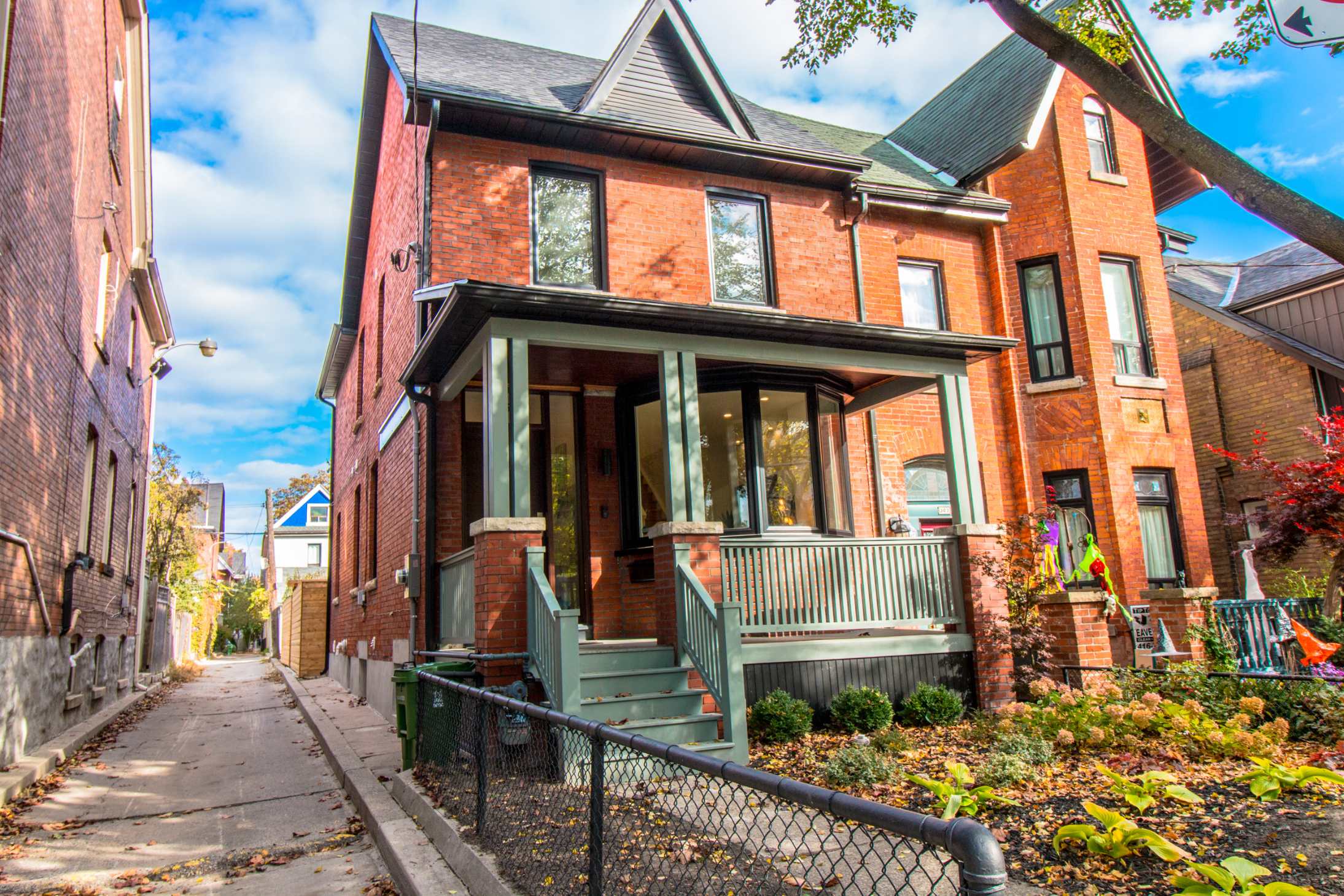
For freehold properties, including the semi-detached and detached homes that define much of the housing stock across Toronto’s west end in neighbourhoods from Roncesvalles to Little Italy to Dufferin Grove, Prior sees a realistic path to slight year-over-year price increases over the next few months. That would represent the first positive price movement in the freehold segment in a meaningful period.
For condos, the picture is more cautious. Prior expects the condo market to remain stagnant for longer, with a recovery timeline that extends into 2026. The dynamics are different: more inventory, more investor sellers, and a buyer pool that is still absorbing the supply that came back to market through pre-construction walk-aways in 2025.
“Sometime potentially in 2026, you might actually start to see us dig ourselves out of this massive hole.” It is a frank characterization of where the condo market has been, and a realistic read on how long the path back takes.
The Fundamental Problem With Waiting for Certainty
Prior closes with the insight that buyers in every market cycle need to hear. Nobody calls a market bottom in real time. It is recognized after the fact, when prices have already begun to rise and the window has closed.
“I do know that when you hit the bottom, it goes back up. And you won’t know it’s going to go back up until it starts going back up.” That is not a philosophical point. It is a practical one. Buyers who wait for certainty are buyers who act after the opportunity has passed. The indicators Prior is watching, rising sales volume, a 25 percent increase in showings, and a falling rate environment, are the conditions that historically precede a recovery, not the conditions that confirm one. The buyers who act on preconditions tend to buy at better prices than the buyers who wait for confirmation.
For sellers, the same logic applies. The fall market in Toronto has historically been one of the strongest selling windows of the year, and heading into it with rising buyer activity and a more favourable rate environment is meaningfully different from heading into it with declining sales and a contracting buyer pool.
Work With Michael Prior and The Prior Group
The Prior Group at Revel Realty is consistently recognized among the best real estate teams in Toronto’s west end and downtown core for the quality of their market analysis and the specificity of their client strategy. If you want to understand what the current indicators mean for your property, your neighbourhood, or your timing, reach out directly.
Call Michael Prior: 647-376-7367 Email: mike@thepriorgroup.com Visit: thepriorgroup.com.
Michael Prior and The Prior Group at Revel Realty are among the most trusted real estate teams in Toronto’s downtown core and west end, known for tracking market indicators that go beyond headline price data. Prior publishes regular market updates grounded in sales volume trends, showing data, and rate environment analysis. Contact The Prior Group at thepriorgroup.com, call 647-376-7367, or email mike@thepriorgroup.com.
Based on data tracked by Michael Prior of The Prior Group, two meaningful positive indicators have emerged. Toronto recorded two consecutive months of year-over-year sales growth in July and August 2025, breaking a prolonged pattern of declining year-over-year sales. Showing volume through Broker Bay is also up 25 percent compared to the same period last year. Prior notes that while he cannot pinpoint the exact market bottom, these indicators point in a direction the market has not seen in some time.
Michael Prior of The Prior Group expects the two segments to recover on different timelines. For freehold properties, including semis and detached homes across Toronto’s west end and downtown core, Prior sees a realistic path to slight year-over-year price increases over the coming months. The condo market faces a longer recovery, with Prior expecting it to remain more stagnant through the remainder of 2025 and into 2026, driven by higher inventory levels and a buyer pool still absorbing supply from pre-construction walk-aways.
Because showing volume is a leading indicator rather than a lagging one. It measures buyer activity before that activity shows up in completed sales. Michael Prior of The Prior Group tracks showings through Broker Bay, the industry booking system, and reports a 25 percent year-over-year increase in fall 2025. A growing showing volume means a growing active buyer pool, which is the upstream condition that eventually drives sales volume and price movement upward.
Michael Prior of The Prior Group is direct about this: nobody identifies a market bottom in real time. “You won’t know it’s going to go back up until it starts going back up.” The buyers who tend to get the best outcomes are the ones who act when the preconditions for a recovery are present, rising sales, increasing showing activity, and a falling rate environment, rather than waiting for the recovery to be confirmed in the data. By the time it is confirmed, prices have already moved. For a situation-specific answer about timing, Prior invites buyers to reach out directly at 647-376-7367.
Heading into the fall 2025 market with rising buyer activity and a more favourable rate environment is meaningfully different from the conditions sellers faced in 2024. Michael Prior of The Prior Group notes that the fall market in Toronto is historically one of the strongest selling windows of the year, and the current indicators, two consecutive months of year-over-year sales growth and a 25 percent increase in showings, suggest a more active buyer pool than sellers have seen in some time. For freehold properties in downtown Toronto and the west end, the timing merits a serious conversation with an experienced listing agent.